
Proprietary datasets
built for energy development.
We ingest public records, regulatory filings, and geospatial sources, then synthesize them into structured, linked datasets purpose-built for energy development.
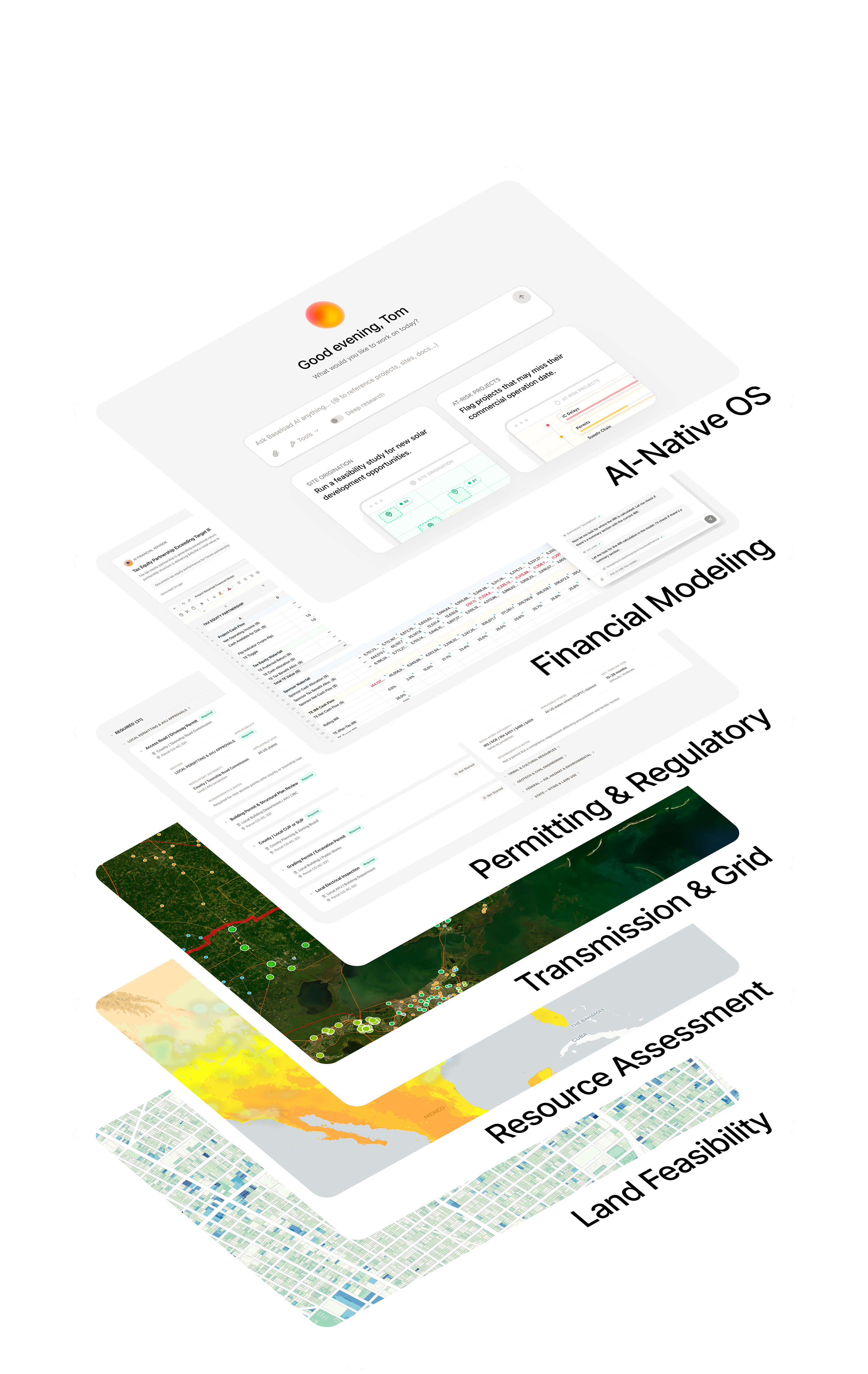
Energy data is fragmented.
The information that power developers need to make decisions (interconnection queues, parcel ownership, permit status, grid capacity) exists. But it's scattered across thousands of county websites, regulatory portals, and federal databases. Each source has its own format, update schedule, and access method.
The result: development teams spend weeks on data collection that should take minutes. Analysts toggle between dozens of browser tabs. Critical information gets trapped in PDFs that no one reads. And decisions get made on stale spreadsheets instead of live data.
We built Basepoint's data layer to solve this by building our own from the ground up.
How we synthesize our datasets From raw source to decision-ready intelligence.
Why proprietary data matters.
Licensed data feeds give you the same information as everyone else. Our approach gives you an edge.
Fresher than any alternative
We monitor and aggregate from multiple sources on rolling schedules. When a new queue entry is posted or a permit application is filed, it appears in Basepoint hours later, not after a quarterly vendor update.
Linked, not siloed
Most data providers give you tables. We give you relationships. Every parcel is connected to its grid infrastructure, zoning, environmental constraints, and regulatory history, because that's how real decisions get made.
Full provenance
Every data point in Basepoint carries metadata: where it came from, when it was collected, how it was extracted. When your VP of Development asks "how did you get this number?", you have a traceable answer.
Built for AI
Our datasets are structured specifically to power AI workflows. When you ask Basepoint's assistant a question about a site, it reasons over clean, linked data, not noisy web scrapes.