
Every ordinance, parsed into rules you can build to
Every county and municipality in your pipeline, already researched: code analysis, meeting minutes, sentiment, and the setbacks that flow straight into the CAD studio.
Every permit, a working record
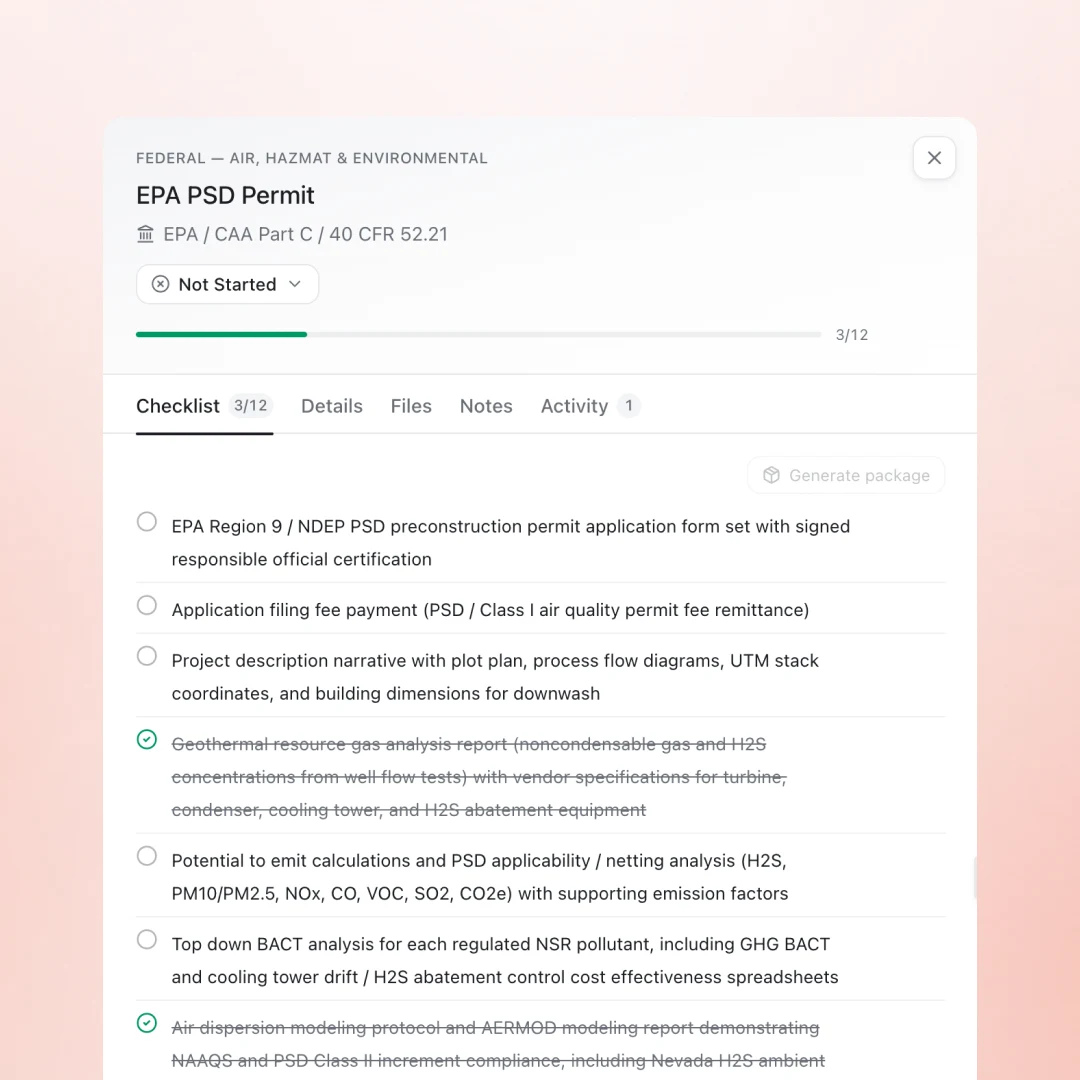
Each permit on a project carries its agency, legal citation, and a requirement checklist, with files, notes, and activity beside it. Items get checked off as evidence lands, and the application package is generated from the record when the list is complete.
The submittal, drafted for you
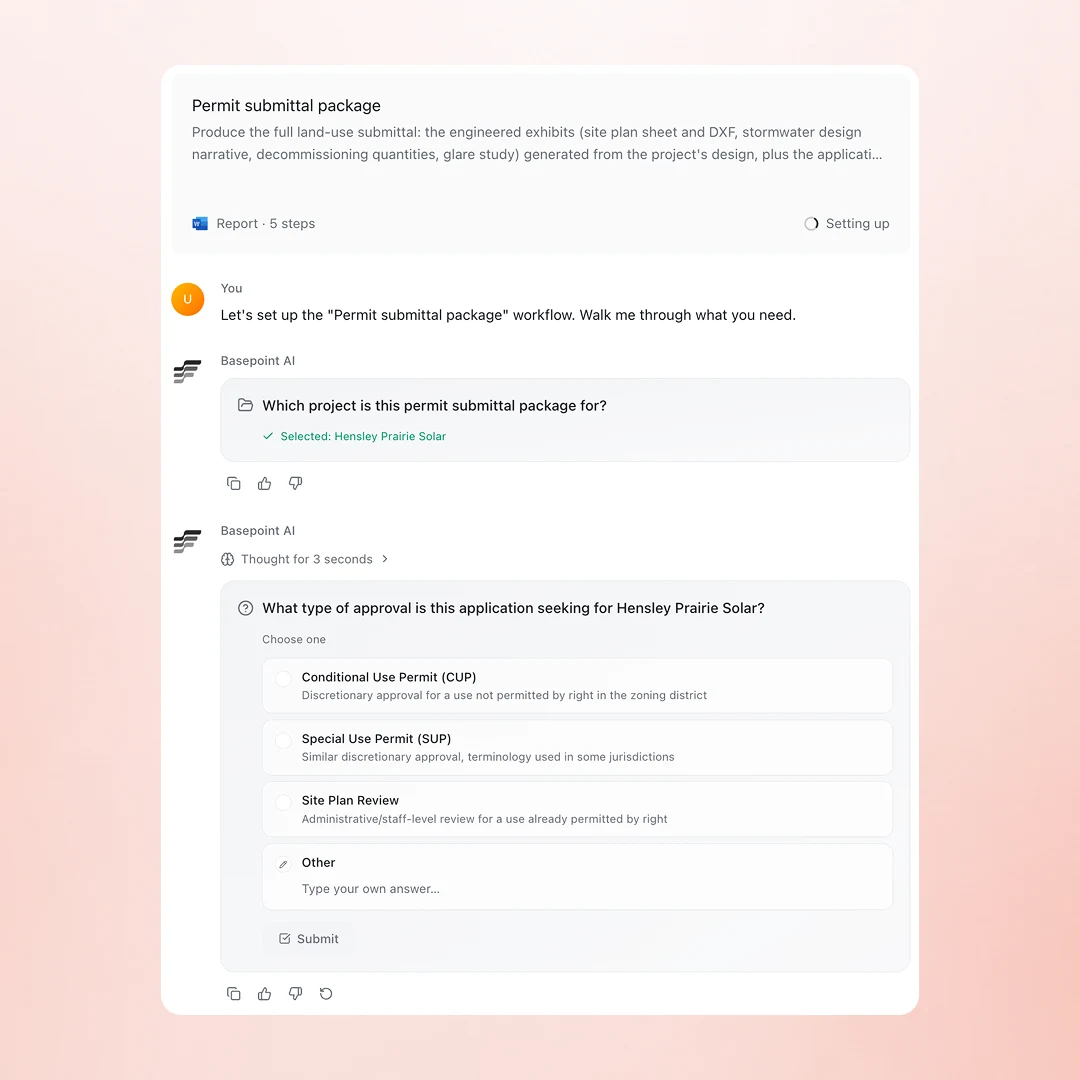
The permit submittal package workflow produces the full land-use application: engineered exhibits from the project's design, stormwater narrative, decommissioning quantities, and glare study. It asks what the application is seeking, CUP, SUP, or site plan review, and drafts to match.
The permit matrix, issued as a report
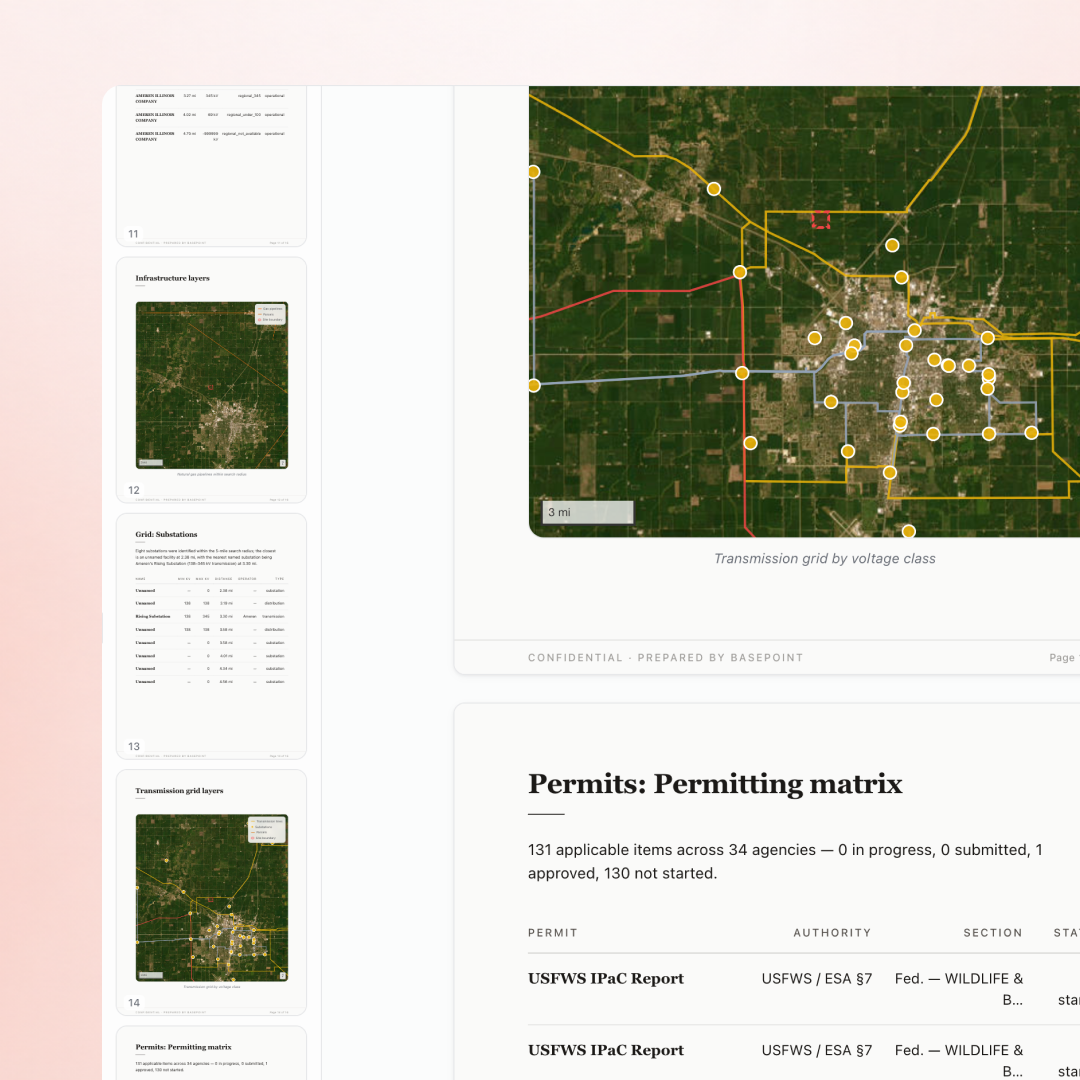
Each site gets a permit report: every applicable item across federal, state, and local agencies with its authority and citation, beside the exhibit maps that ground it. The run shown here surfaced 131 applicable items across 34 agencies.
Ahead of the rules, not behind them
Daily change monitoring
Standing agents scan watched jurisdictions and flag ordinance and moratorium changes that touch your projects.
Difficulty scoring
Permitting difficulty workflows rank jurisdictions so origination avoids the hardest paths early.
Conditions to the field
Permit conditions are tracked through construction, so hearing commitments are met on site.
Frequently asked questions
Does this cover local rules or just state frameworks?
Both. State frameworks drill into local jurisdictions, including municipal code analysis and solar and wind ordinances with moratoria.
Where does community sentiment come from?
County-level sentiment derives from local coverage and regulatory activity, shown beside the code analysis for each place.
Does this replace permitting counsel?
No. It gives your team and counsel the same organized, current picture in minutes instead of days of manual research.
Do the setbacks here connect to design?
Yes. The same ordinance database that powers the jurisdiction analysis feeds layout generation in the CAD studio, so a design starts from the rules you researched, not a copy of them.
What is in the permit matrix?
The permits a project type triggers in a state, with the responsible agencies, then a drill-down into the local jurisdiction stack for the specific site.
What happens after a permit is granted?
Conditions of approval are tracked through construction, so the commitments made to get the permit do not vanish once it is framed on the wall.
Look up the county you are fighting with
Name it at the demo and read its code analysis and latest minutes on the spot.